• You're one step from joining Hammock Camping Forum – Ultralight Gear, DIY Setups & Backcountry Tips.
    Create a free account to post, follow threads, and never miss an update.  Sign up free →

My experience with hammock camping

beenutmeg

Member
Joined
Sep 12, 2025
Messages
5
I saw some people camping in hammocks by the lake the other day and it looked so simple. But after reading more about it, I'm starting to wonder if it's actually any better than a tent. People say hammocks are lighter but when you add in a tarp, quilts, and other gear, does it really save that much weight? And where do you put all your stuff if you don't have walls? I also hear they're more comfortable, but it seems like setting them up can be just as much work as a tent. I'm thinking about trying it out, but the cost of buying all the gear seems like a lot if I might not even like it.

The usual pros and cons I see online are:
Lighter (although is a hammock, tarp, top blanket, and underquilt really that much lighter than a modest tent, sleeping bag, and camping mat?)
Greater comfort (sleeping, perhaps, but what about the ease of having walls and a roof to protect you and your belongings from the weather rather than a roof and a private cocoon? Where do you put your belongings?)
Camping ease (you only need two trees for hammock camping, but all you need for a tent is ground), and it's very simple to find a level area large enough for a tent. Additionally, hammocks are said to be much quicker to set up than tents, but after watching videos, the time required seems too close to be significant, unless you're using extra hammock packing equipment.

Has anyone here switched from a tent to a hammock?
 
>Has anyone here switched from a tent to a hammock?
beenutmeg, Welcome to the forum. This is, "hammockcampingforum.com" after all.

It's all "over pizza and beer", hammocks vs tents, top and bottom quits vs sleeping bag, tarp vs rainfly, two trees (or one tree and a Solo pole) vs level ground with the right slope, no pine cones, rocks, tree roots, etc.

I'm puzzled about your, "... having walls and a roof to protect you ...". In hammock camping, we call that a tarp. :)

You are correct that it's difficult to "try out" because, unless you have a hammock camping friend, you have to invest in gear. Unfortunately, many go to Amazon and by some cheap Chinese 6 to 8 ft hammock that is woefully too short for anything but a day hike rest. So they don't have a good experience. Or the judge after one night, not giving their body time to learn how to relax. Heck, I'm never comfortable the first night anywhere, not even in a hotel.

If you have access to an REI, many people start with some model of a Hennessy hammock. They can give it a fair try and respectfully honor REI's return policy. However, Hennessy's run a little short. If you are round 6 ft tall, look for something in the 11 ft range - which is the basic/standard size of a camping hammock.

I started out with hammock from The Dollar Store - it was just a nylon net. it was okay for a short rest. Then I used a Hennessy Explorer for a year. Then I moved to a WarBonnet BlackBird, the WarBonnet RidgeRunner Bridge Hammock and many other brands. Part of the reason I could afford it is there are great buys on used gear. People trade up, They have an 850 fill quilt but now 950 fill is available. Their hammock fabric is 20D, but now they can get it in a lighter 10D weight, and maybe they don't need a Double Layer (a sleeve for a ground pad for insulation) so they go for a single layer to lose a little more gear weight.

Each option, tent or hammock, has it's pros and cons. As a Kayak Camper, I have room for both - and take both. But it's been years since I've slept in a tent. Note that if there are no trees and you have hiking poles (and a ground pad) it's not hard to set your hammock up as a bivi shelter on the ground.

You've asked sincere questions; I'll try to answer them a little later - it's late now; sleepy time.
 
Last edited:
You're not wrong about the weight. By the time you add tarp + underquilt + top quilt, you're basically at tent weight, sometimes heavier. The real win is comfort and being able to camp on rocky or sloped ground where a tent sucks. Gear just goes under the tarp or in a small gear sling.
 
The youth of today seem to have greatly joined the Church (cult) of Ray Jardine. Ultralite is fine if you are trying to set some record - fastest time to complete a Thru-Hike, Personal Best of miles Hiked a day. That's not way I go into nature.

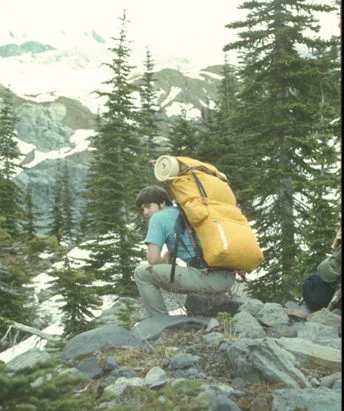
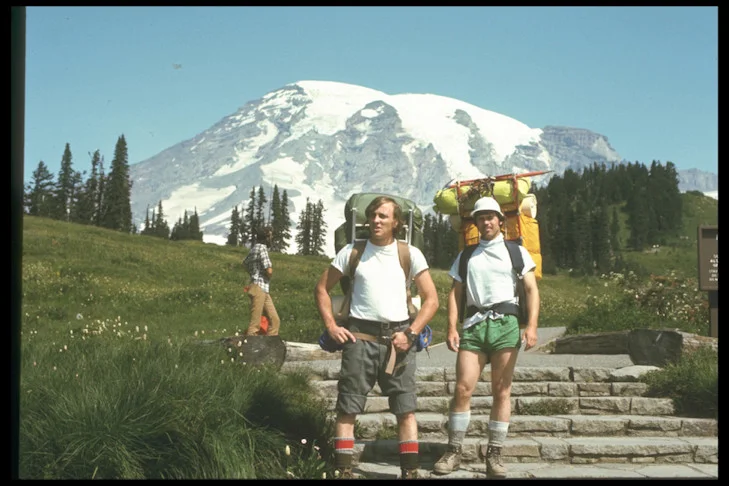
Here are two photos, one was taken, back in the day, as I was near the Mt. Hood stretch of the Oregon PCT (which I completed), the other was taken before summiting Mt. Rainier. Do I like I'm even a little bit concerned about the pack weight. Trust me, it is not excessive; I'm not carrying "extra gear" as exemplified in the movie "Wild". Please understand that this is not "bragging". I'm just trying to show that if you want to chase ounces, if that's your thing, fine. But you don't need "ultralite" to have a good time.

PaulHimalayaPack.webp
Paul&DaveRainier.webp


My point is, unless you have hundreds of dollars to spend on saving 4 ounces, there is always another lighter piece of gear that will do the job. A mistake people make is they think the lighter gear is just as robust as its slightly heavier brother, only it costs (a whole ...) lot more. That's not the case. It's all compromise.

StitchesBear has the right idea. Just consider your hammock vs tent setup to weigh the same. The hammock advantages are increased comfort and ease of setting up/taking down in adverse weather - where you can do everything under the tarp and take the tarp down last. Everything else is balanced out. Tent Campers say, "You need two good trees, the right distance apart, and no tarp interference on the sides. The hammockcamper says you need level ground with proper drainage.

It goes on and on - Top quilt and underquit (no zipper weight) vs Sleeping bag. Except you don't need the underquilt if you are going to use the same ground pad you'd use with a tent.

My Cloud 71 hammock weighs about 8 ounces. If I use Amsteel for suspension that will cost me a few more ounces. A dyneema tarp would cost in the $300 range but weight about 7 ounces. I'll save $200 and be perfectly happy with a SilPoly Tarp that weighs 5 ounces more. Even more happy because - again, compromise - there on "Cons" to a Dyneema tarp (bulkier, louder in the rain, translucent).

But that Cloud 71 is more of a demo piece for Show-n-Tell. It's not what I take if I'm going to be out for a week.
 
The youth of today seem to have greatly joined the Church (cult) of Ray Jardine. Ultralite is fine if you are trying to set some record - fastest time to complete a Thru-Hike, Personal Best of miles Hiked a day. That's not way I go into nature.

Here are two photos, one was taken, back in the day, as I was near the Mt. Hood stretch of the Oregon PCT (which I completed), the other was taken before summiting Mt. Rainier. Do I like I'm even a little bit concerned about the pack weight. Trust me, it is not excessive; I'm not carrying "extra gear" as exemplified in the movie "Wild". Please understand that this is not "bragging". I'm just trying to show that if you want to chase ounces, if that's your thing, fine. But you don't need "ultralite" to have a good time.

View attachment 32 View attachment 33

My point is, unless you have hundreds of dollars to spend on saving 4 ounces, there is always another lighter piece of gear that will do the job. A mistake people make is they think the lighter gear is just as robust as its slightly heavier brother, only it costs (a whole ...) lot more. That's not the case. It's all compromise.

StitchesBear has the right idea. Just consider your hammock vs tent setup to weigh the same. The hammock advantages are increased comfort and ease of setting up/taking down in adverse weather - where you can do everything under the tarp and take the tarp down last. Everything else is balanced out. Tent Campers say, "You need two good trees, the right distance apart, and no tarp interference on the sides. The hammockcamper says you need level ground with proper drainage.

It goes on and on - Top quilt and underquit (no zipper weight) vs Sleeping bag. Except you don't need the underquilt if you are going to use the same ground pad you'd use with a tent.

My Cloud 71 hammock weighs about 8 ounces. If I use Amsteel for suspension that will cost me a few more ounces. A dyneema tarp would cost in the $300 range but weight about 7 ounces. I'll save $200 and be perfectly happy with a SilPoly Tarp that weighs 5 ounces more. Even more happy because - again, compromise - there on "Cons" to a Dyneema tarp (bulkier, louder in the rain, translucent).

But that Cloud 71 is more of a demo piece for Show-n-Tell. It's not what I take if I'm going to be out for a week.
I just started hammock camping last month after borrowing a friend’s setup on a weekend hike and i can say that it totally changed how I sleep outdoors! Your comment was super helpful. I’m curious, did you notice a big difference in comfort when switching to underquilts vs pads? And how do you handle rain? do you always use a tarp or just when the forecast looks rough?
 
earth2jim, more things fall from the sky besides rain.

I spent very little time with a pad, but they would be fine in the milder temperatures. If I were to use one more regularly, I'd be sure to get a double-layer (DL) hammock. The DL has an extra layer of material, a sleeve under the hammock body, you can slip the pad into. Because you want the pad to contour to your body, and its job is more a barrier to the wind rather than insulating you from the ground, you inflate it less, so it is not so rigid.

Or you could get an underquilt protector (UQP) - another piece of material that suspends under your hammock. It's an additional wind block. You could put your pad in the UQP under your hammock for more insulation; again, this is a summer solution, not a 35° at night solution.

I'd say most my need for a tarp - because I usually plan outings for good weather (often paddling in the ocean or lake) - is as a sun shield during the day and moon shield during the night. In a hammock, I am usually looking up-ish. Though it gets dark when I close my eyes, having the sunlight or moonlight right in my eyes can be annoying. Note that's a "Con" (for me) against the ultralite Dyneema tarps. They are pretty much translucent.

I always string the tarp up and set stakes (don't trip over them). But I might then keep the tarp in a snakeskin. Snakeskins are a "tube", originally nylon, but now mesh is a more common material, that slides over the tarp so it looks like an 11-foot boa constrictor. It's very useful if you have to set up in windy conditions because you can pull the skin back and expose only a little of the tarp at a time as you guy it out. Before I used skins, my score in successfully setting up in windy conditions was Wind - 2, cougarmeat - 0.

The point in setting the stakes is, if I do have to deploy the tarp in the middle of the night, I can just pull the skins back and connect the guy lines. Same if I have the tarp in porch mode. Porch mode is when you use a pole/s to elevate one or both ends of one side of the tarp so it's more like an awning.

These day, if I can, I like to set the tarp parallel to the wind. There is less force against the. tarp sides. In fact, the wind parallel often produces "lift", rather than pushing the tarp sides in, so I have to put my guy stakes at more of an angle. The support trees act as a wind block and my tarps usually have some blockage at the ends - like the doors of the Warbonnet superfly or the "mini-doors" on the ThunderFly.

On skins - there's a preference. You can get them in one piece or two, like one long "sock" for an 11-foot hammock or two 6-foot pieces (for a little overlap) for the same. I started with a two-piece skin, then moved to one piece, but I think (I need more time outdoors) I prefer the two-piece myself - easier to pull on, but you are dealing with two things instead of one. Really, just personal preference.
 
Last edited:

Latest posts

Back
Top